Dynamic pricing matters because online prices change constantly, and a seller who updates prices by hand reacts too late. Its main benefits are faster reactions to competitors, higher margins when competitors run out of stock or raise prices, protected margins through price floors, better stock clearance and hours saved on manual checks. Its main disadvantages are price wars, customer distrust, legal risk with personal data, wrong prices from bad data and the effort of managing rules. It pays off most for sellers with many products, many competitors and price-sensitive customers.
Source: PriceRest 2026 study of 261 online stores in 24 countries. New to the topic? Start with What is dynamic pricing?
The case for dynamic pricing
Why dynamic pricing matters in 2026
Dynamic pricing matters because your competitors’ prices do not stand still. When prices change every few days, a price set once a month is wrong for most of that month: either too high and losing sales, or too low and giving away margin.
Our 2026 study tracked prices across 261 online stores in 24 countries. Almost half of all products changed price within 30 days, and the two main sales channels behaved very differently:
| Measure | Marketplaces | Online stores |
|---|---|---|
| Products that changed price within 30 days | 45% | 49% |
| Median size of a price change | 4.6% | 20% |
| Products discounted at least once in 90 days | 29% | 66% |
Marketplaces move in many small steps, which suits automated repricing. Online stores move in fewer, larger promotional jumps, which makes timing and price floors more important. On Amazon Marketplace, research by Chen, Mislove and Wilson (2016) found more than 500 sellers very likely using algorithmic pricing, so many of your competitors already react automatically.
9 benefits of dynamic pricing
1. You react to competitors in hours, not weeks
When a key competitor cuts a price, rule-based pricing can respond the same day, within limits you set. Manual pricing usually notices the change days later, after the sales are lost.
2. You earn more when the market allows it
Dynamic pricing is not only about cutting. In our study, 49% of price changes were increases. When competitors run out of stock or raise their prices, rules can raise yours too, up to a ceiling. These increases are often where most of the extra margin comes from.
3. You protect your margin with floors
Every rule works above a minimum price that covers cost, fees and target profit. A good system never follows a competitor below that floor, which manual pricing under pressure often does.
4. You stay competitive where shoppers compare
On marketplaces, the offer shown first wins most of the sales. Repricing within a floor and a ceiling keeps you in contention for the Buy Box without permanent price cuts. See our Amazon pricing strategy guide.
5. You clear slow stock before it ages
Rules can lower prices step by step on products that have not sold for a set number of days, and stop at the floor. You clear aging stock without a blanket sale on the whole catalog.
6. You save hours of manual work
A catalog of 1,000 products with 10 competitors each means 10,000 prices to check. Automated competitor price tracking plus pricing rules turns that daily job into a short review of exceptions.
7. Your prices stay consistent across channels
The same rules can apply to your store, marketplaces and countries, so you avoid one channel undercutting another by mistake. For international sellers, prices are compared in one currency.
8. You learn how price affects demand
Small, controlled price changes show how sensitive each product is to price. Over time this tells you where a higher price costs few sales and where a small cut brings many more, which is price elasticity in practice.
9. Supply can follow demand
Higher prices at peak times can bring more supply into the market. In a widely cited study of Uber’s surge pricing, Cohen, Hahn, Hall, Levitt and Metcalfe (NBER, 2016) estimated that UberX generated about 6.8 billion dollars of consumer surplus in the US in 2015. The benefit depends on how transparent and fair the price changes feel to customers.
6 disadvantages of dynamic pricing
| Disadvantage | What goes wrong | How to limit it |
|---|---|---|
| Price wars | Two repricers keep undercutting each other | Floors, a minimum step size and a cooldown between changes |
| Customer distrust | Shoppers feel prices are unfair or unpredictable | Explain that prices change and keep the checkout price stable |
| Legal risk | Undisclosed personalized prices or coordination with competitors | Use market data, not personal data; never share prices with rivals |
| Bad data, bad prices | A wrong product match or a pricing error sets your price | Accurate product matching and outlier filters |
| Complexity | Too many rules that conflict | Start with three to five rules and review them monthly |
| Margin erosion | Rules that only ever cut prices | Rules that raise prices too, up to a ceiling |
Customer reaction is the disadvantage businesses underestimate most. In February 2024, Wendy’s comments about testing dynamic pricing on digital menu boards were widely reported as surge pricing, and the company had to clarify that it would not raise prices at its busiest times. For the legal side in the US, EU and UK, see Is dynamic pricing legal?
Is it right for you?
When dynamic pricing pays off
| Factor | Pays off most | Pays off less |
|---|---|---|
| Catalog size | Hundreds or thousands of products | A handful of products |
| Competition | Many sellers offer the same product | Unique or own-brand products |
| Price sensitivity | Shoppers compare prices before buying | Buyers choose on brand, service or contract |
| Channel | Marketplaces and comparison sites | Long-term B2B agreements |
| Stock | Seasonal, perishable or fast-moving stock | Stable, made-to-order stock |
| Data | Reliable competitor and cost data | No cost data and no competitor tracking |
If most of your products sit in the left column, dynamic pricing is likely to pay off. If most sit in the right column, start with price monitoring and review prices manually before you automate.
The margin math
A small price increase adds straight to profit, while a price cut must be paid back with extra sales. That is why good dynamic pricing raises prices when it can, not only cuts them when it must.
Illustrative example: a product sells for 100 with a gross margin of 25, so you earn 25 per unit.
| Price move | New profit per unit | Sales needed to keep the same profit |
|---|---|---|
| Raise by 3% | 28 | About 11% fewer sales still break even |
| Cut by 5% | 20 | 25% more sales |
| Cut by 10% | 15 | 67% more sales |
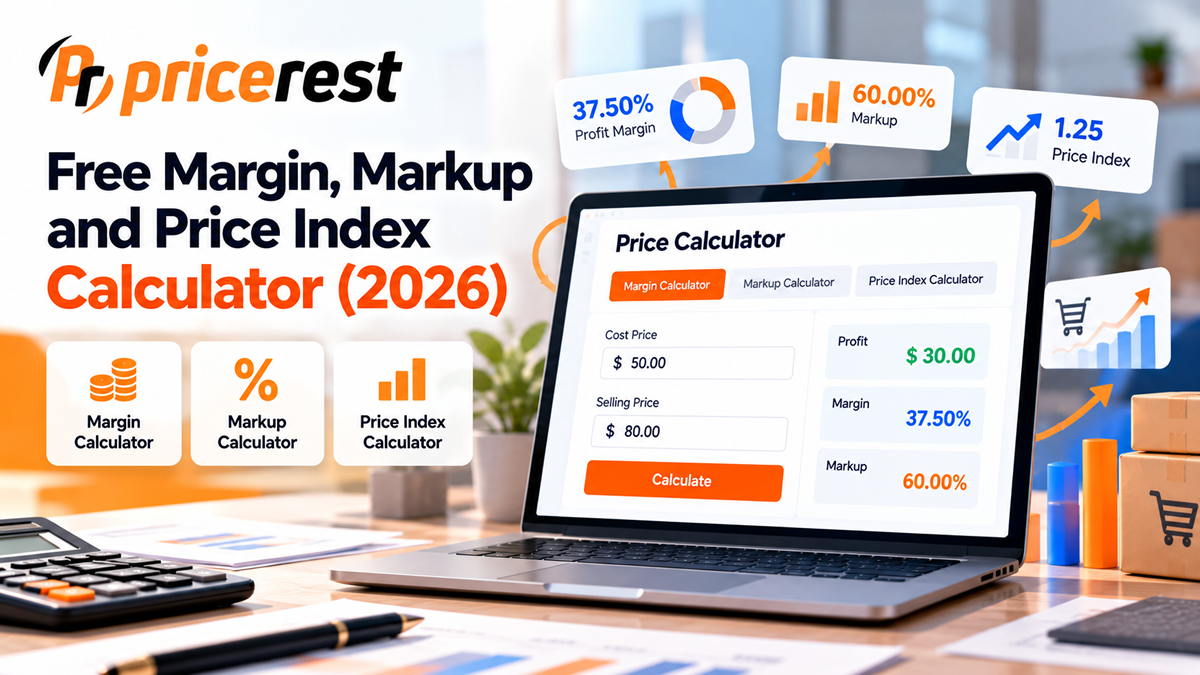
Run the numbers for your own products with our margin, markup and price index calculator, and set every floor before you switch on automatic rules. Before you cut a price, read Your competitor is cheaper. Should you lower your price?
How to get the benefits without the downsides
- Set a floor and a ceiling for every product. The floor covers cost, fees and target profit; the ceiling protects trust.
- Write rules that raise prices too. Use competitor stockouts and higher competitor prices, not only lower ones.
- Follow the right competitors. Five to ten real rivals per category, not every seller online.
- Filter outliers. Ignore competitor prices far below the market until a person checks them.
- Limit how often prices change. A minimum time between changes prevents price wars and confusion.
- Be transparent. Tell customers that prices can change, and never change the price during checkout.
- Review every month. Compare sales, margin and price index before and after each rule change.
PriceRest
How PriceRest helps
PriceRest is dynamic pricing software built on competitor price monitoring. It finds and matches competitor products, tracks their prices and stock, and updates your prices with your rules, always between the minimum and maximum price you set. It can raise prices when competitors are out of stock or more expensive.
- Coverage. Amazon on 20 marketplaces, Google Shopping, other marketplaces and more than 2,500 online stores in 64 countries.
- Matching. Google Search, Google Shopping and site search discovery, with product-code and AI image matching.
- Rules. Competitor-based rules with floors and ceilings, price history and stock monitoring.
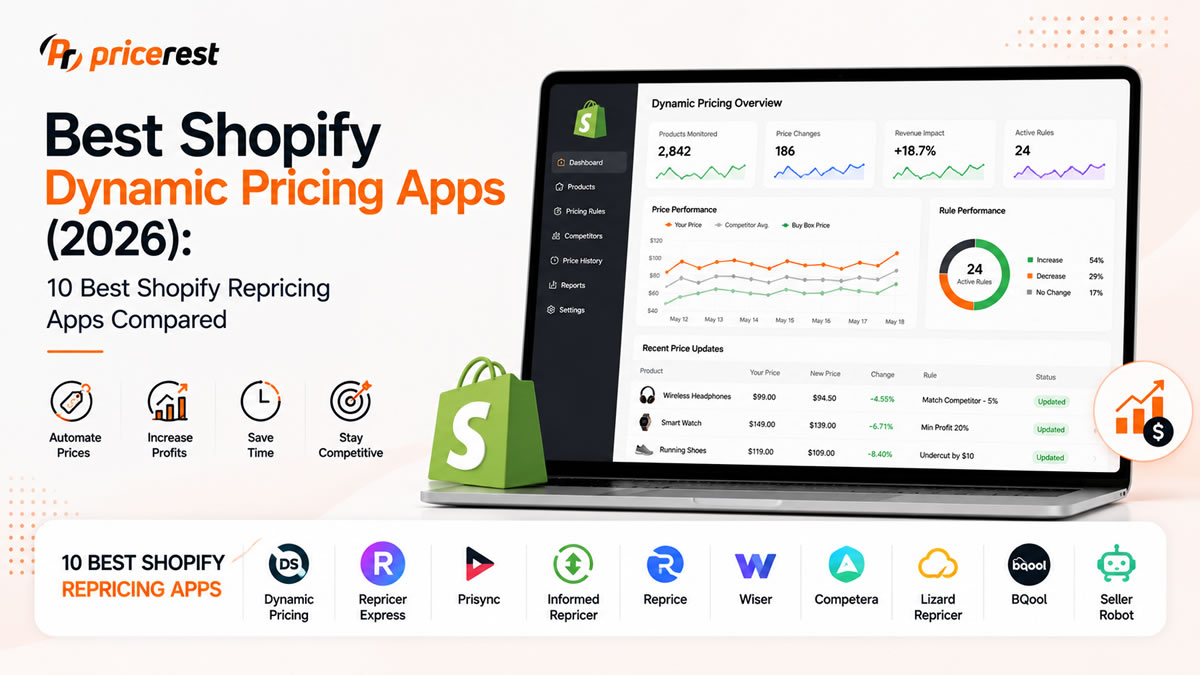
- Integrations. A Shopify dynamic pricing app, Excel export and API.
FAQ
Frequently asked questions
Why is dynamic pricing important?
Dynamic pricing is important because online prices change often. In a 2026 PriceRest study of 261 online stores, 46% of products changed price within 30 days. Sellers who update prices automatically can react to competitors, protect margins with price floors and raise prices when the market allows.
What are the benefits of dynamic pricing?
The main benefits are faster reactions to competitor price changes, higher margins when competitors run out of stock or raise prices, protected margins through minimum prices, better stock clearance, consistent prices across channels and hours saved on manual price checks.
What are the disadvantages of dynamic pricing?
The main disadvantages are the risk of price wars, customer distrust when prices seem unfair, legal risk when prices use personal data or involve competitors, wrong prices caused by bad product matches, the work of managing rules and margin loss when rules only cut prices.
Does dynamic pricing increase profit?
It can, if rules raise prices as well as cut them and every product has a price floor. A small price increase adds directly to profit, while a cut must be repaid with extra sales. For example, at a 25% margin, a 5% price cut needs 25% more sales to keep the same profit.
Is dynamic pricing good for customers?
It can be. Dynamic pricing can lower prices when demand is weak and bring more supply when demand is high. Customers accept it more easily when prices are transparent, the price at checkout matches the price shown and changes are not based on personal data.
Can small businesses use dynamic pricing?
Yes. Small online stores can start with a few products, a handful of key competitors and simple rules with a minimum and maximum price. Dynamic pricing tools that include competitor tracking make it practical without a pricing team.
When should you not use dynamic pricing?
Dynamic pricing helps less for unique or own-brand products with few direct competitors, for buyers who choose on brand or service rather than price, and for long-term B2B contracts with fixed prices. In those cases, monitor competitor prices and review your prices manually.
Does dynamic pricing cause price wars?
It can when two sellers use rules without price floors and keep undercutting each other. Floors, a minimum time between changes and rules that ignore extreme competitor prices prevent most price wars.
How often should prices change?
It depends on the channel. Marketplace prices often change several times a day, while many online stores change prices less often but in larger steps. Set a minimum time between changes so that customers do not see a different price every few minutes.
What do you need before starting dynamic pricing?
You need product costs and fees to set a minimum price for each product, a list of key competitors, accurate matching of your products to theirs, a clear goal such as margin or sales volume and a few simple rules to test on a small group of products first.
Get the benefits of dynamic pricing, safely
Competitor price tracking, product matching and rule-based repricing with floors and ceilings across Amazon, Google Shopping and 2,500+ online stores. 14-day free trial, no credit card required.
Start Free Trial