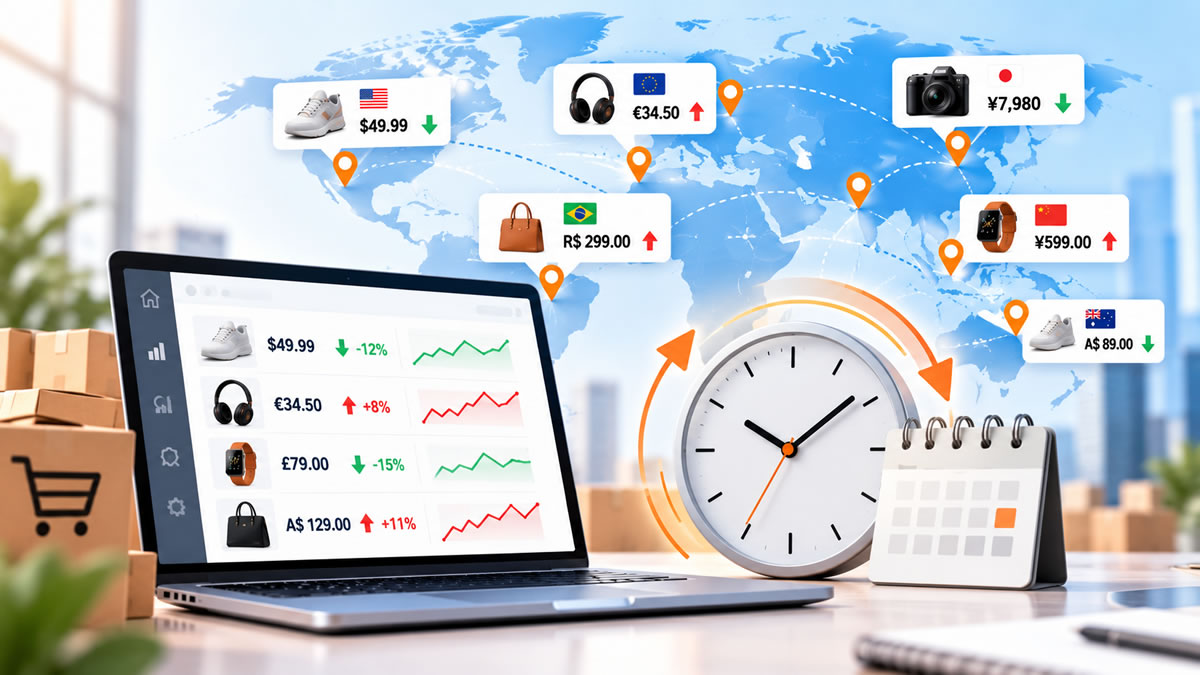
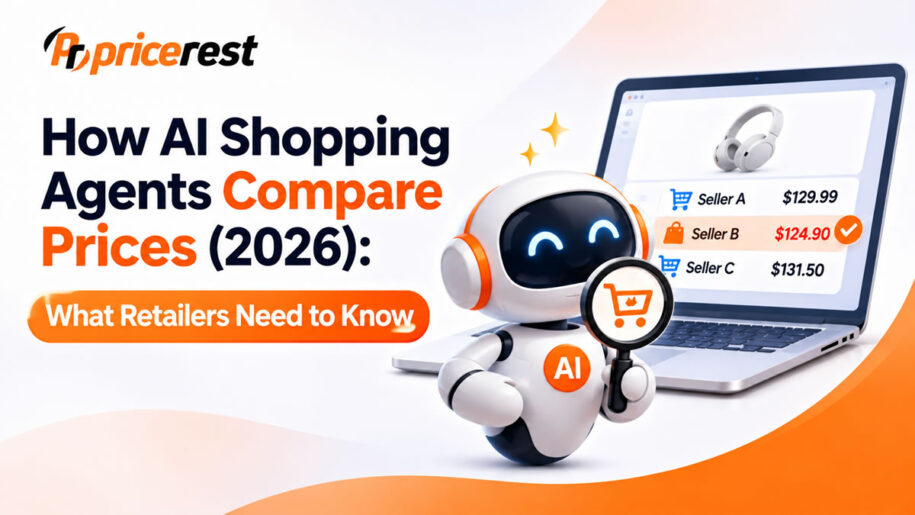
AI shopping agents compare prices by reading product data from merchant feeds, shopping indexes and retailer websites, matching identical products and weighing each offer’s total price, delivery, stock, returns and ratings against what the shopper asked for. Some agents only recommend; others, such as Google’s agentic checkout, can track a price and buy when it falls within the shopper’s budget, after asking for permission. For retailers, this means software now compares your prices with every competitor in seconds. Accurate product data, a competitive total price, real-time stock and continuous competitor price monitoring decide whether an agent picks your offer.
Sources: Adobe, January 2026 (November 1 to December 31, 2025, clicks from generative AI tools to US retail sites); PriceRest 2026 study. Agentic commerce changes quickly; dates below are as announced by the companies.
The basics
What is an AI shopping agent?
An AI shopping agent is software built on a large language model that helps a person shop. It understands a request in plain language, searches for matching products, compares offers across stores and, in some cases, completes the purchase on the shopper’s behalf after the shopper approves.
Not every AI shopping tool does the same job. It helps to separate three kinds:
| Type | What it does | Examples |
|---|---|---|
| Shopping assistants | Answer questions, recommend products and link to stores; the shopper buys on the store’s site | Product discovery in ChatGPT, AI Mode in Google Search |
| Buying agents | Track prices and complete checkout for the shopper, with permission | Google agentic checkout, browser agents using Shopify checkout tools |
| Retailer agents | Answer questions for one brand or store, like a virtual sales associate | Google Business Agent |
All three compare products and prices. The difference is who acts on the comparison: the shopper or the agent.
Agentic commerce in 2025 and 2026: what happened
| Date | Event | Why it matters for pricing |
|---|---|---|
| Sep 29, 2025 | OpenAI launched Instant Checkout in ChatGPT, powered by Stripe, together with the open Agentic Commerce Protocol | Products and prices became buyable inside a chat |
| Nov 4, 2025 | Amazon sued Perplexity over purchases made by its Comet browser agent | Large marketplaces started to fight outside agents |
| Nov 13, 2025 | Google added agentic checkout: shoppers track a price with a budget, and Google can buy when the price falls within it | An agent now watches prices and buys at the right moment |
| Jan 11, 2026 | Google announced the Universal Commerce Protocol, co-developed with Shopify, Etsy, Wayfair, Target and Walmart | A shared standard for agents to discover, buy and support orders |
| Feb 20, 2026 | eBay’s updated user agreement banned unauthorized buy-for-me agents | Not every platform lets agents buy |
| Mar 2026 | OpenAI said Instant Checkout is moving to Apps and that it is prioritizing search and product discovery | In ChatGPT, discovery and price comparison stay; checkout moves to merchants |
| Sep 28, 2026 | Shopify opened checkout to browser-based AI agents for eligible merchants | Agents can buy on independent stores with buyer approval |
| Nov 4, 2026 | Google brought UCP-powered checkout to Canada in AI Mode and the Gemini app | Agentic checkout is spreading beyond the US |
The direction is clear even as individual products change: more shopping starts in an AI conversation, and the comparison between your price and your competitors’ prices happens before the shopper reaches your site.
How AI shopping agents compare prices
Agents do not publish their exact ranking formulas, but the process follows the same steps: understand the request, find candidate offers, confirm they are the same product, compare the full offer and, for buying agents, watch the price and buy with permission.
- Understand the request. The shopper gives constraints in plain language: product, size, color, budget, delivery date. Google’s price tracking, for example, takes the size, color and maximum price the shopper wants to pay.
- Find candidate offers. Agents pull products from structured sources and the open web. Google’s agents use product listings that retailers send through Merchant Center; browser agents read live product pages directly.
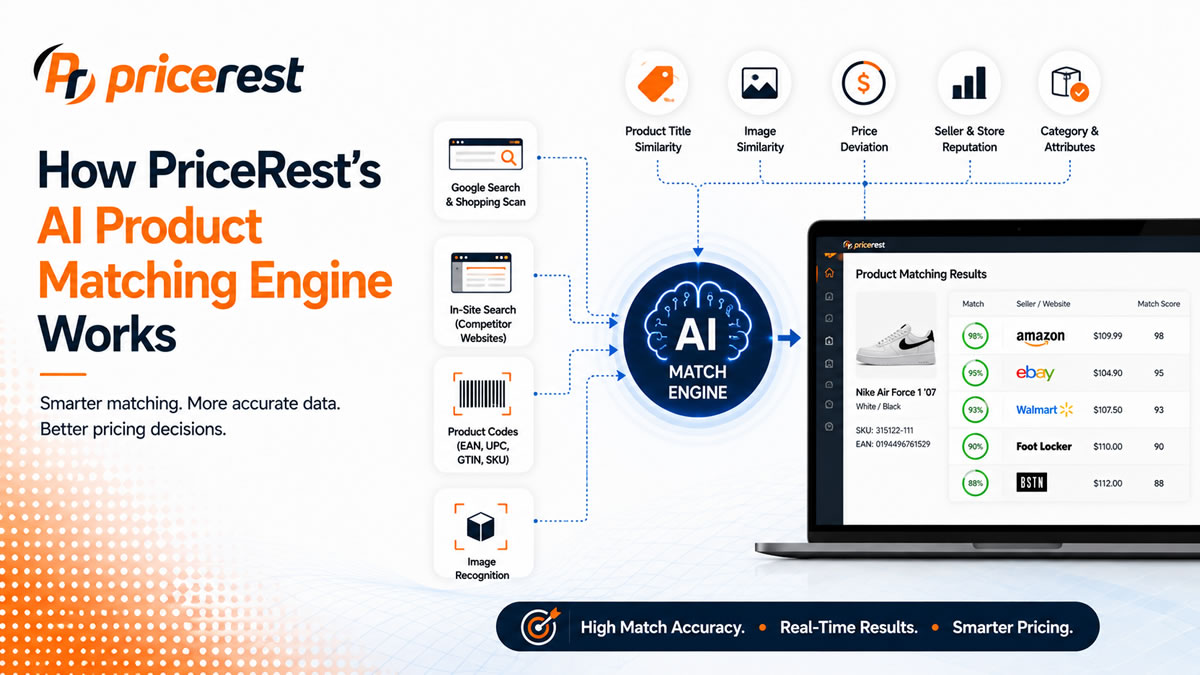
- Match identical products. Before comparing prices, the agent has to know two listings are the same item. GTINs, brand and model numbers make this reliable; vague titles make it guesswork.
- Compare the full offer. Price is only one input. Agents look at shipping, delivery time, stock, return policy, ratings and seller trust, because the shopper asked for the best option, not just the lowest number.
- Watch the price over time. Buying agents can track a product and act when its price enters the shopper’s budget, so short price drops are no longer missed.
- Buy with permission. Google says it always asks for permission before it buys. In UCP checkout, the retailer remains the seller of record.
Two practical details matter for sellers. Google’s UCP documentation makes real-time inventory checks the retailer’s responsibility and requires an out-of-stock error if an item sells out during checkout. And Google added dozens of new Merchant Center attributes for conversational surfaces, covering things like common product questions, compatible accessories and substitutes.
What research says about how agents choose
The most detailed public study so far is What Is Your AI Agent Buying? by Allouah, Besbes, Figueroa, Kanoria and Kumar (2025). The authors audited AI shopping agents in a simulated marketplace and found:
- Demand concentrates. Agents tend to pick a few products and almost ignore the rest.
- Models disagree. How much agents care about price, ratings and reviews differs sharply between AI models.
- Updates move markets. A model update can shift market shares substantially.
- Position bias persists. Where a product appears in a list still affects choices, differently for each model.
- Sponsored tags can hurt. Agents consistently penalized sponsored tags and rewarded platform endorsements.
- Descriptions matter. Simple, query-specific changes to a product description produced significant market share gains in the simulation.
These results come from controlled experiments, not live sales data, but they point in one direction: in agentic commerce, small differences in price and product data can decide whether you get chosen at all.
Myths and facts
| Myth | Fact |
|---|---|
| AI agents always pick the cheapest offer | Agents weigh total price, delivery, stock, returns and ratings, and their sensitivity to price differs by model |
| Agents buy without asking | The checkout features announced by Google and Shopify require the shopper’s approval |
| Only big retailers are affected | Shopify opened agent checkout to all eligible merchants, and browser agents can read any public store page |
| Ads will carry over to agents | Research found agents penalize sponsored tags, so product data and price matter more |
| ChatGPT is the main place where agents buy | In 2026 OpenAI moved checkout to merchant apps and focused on discovery, while Google pushed checkout in AI Mode and Gemini |
Impact
What this means for retailers
1. Your total price is compared instantly
A shopper used to check two or three stores. An agent compares every store it can read in seconds, including shipping. If your item price is competitive but your shipping is not, the agent sees it immediately. Track your price index on the total price, not only the item price.
2. Short price drops get noticed
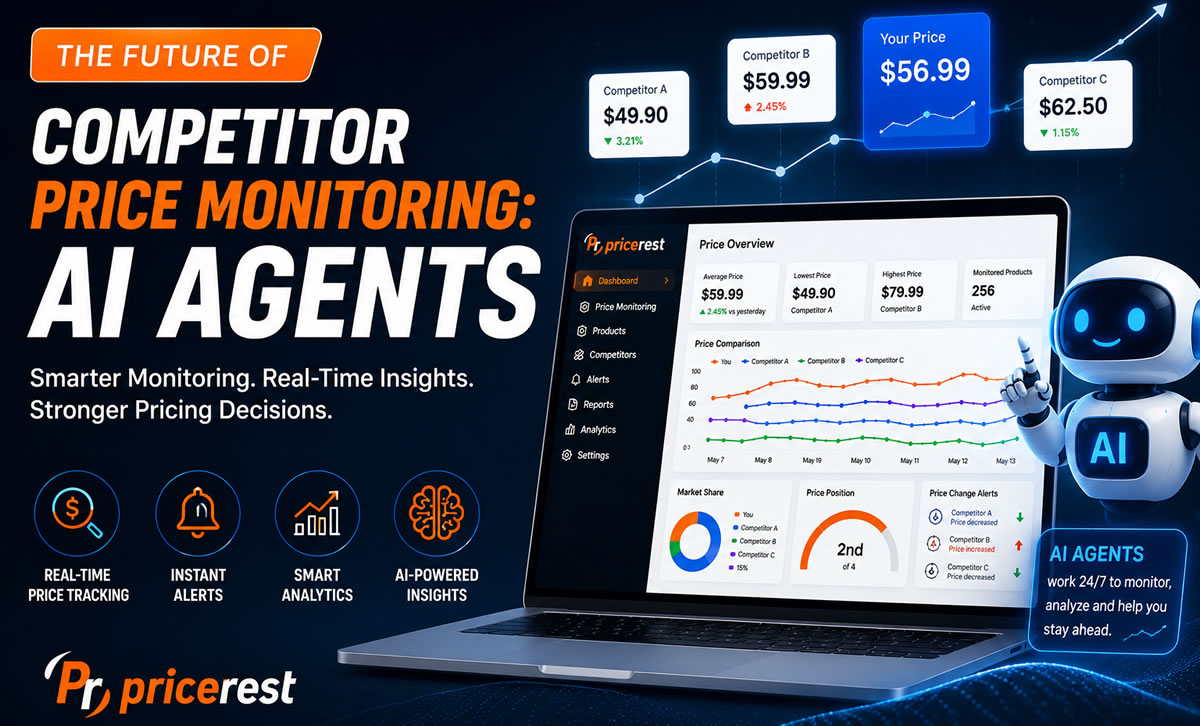
Prices already move fast: in our 2026 study, 46% of products changed price within 30 days and 56% of price cuts were reversed within 14 days. With agents tracking prices for shoppers, a competitor’s two-day discount can catch buyers who would have missed it. You need to know about competitor price moves the same day, through competitor price tracking.
3. Data accuracy becomes a ranking factor
An agent can only choose an offer it understands. Wrong prices in a feed, stock that is not up to date or missing GTINs make your offer harder to match and easier to skip. Keep the price in your feed, on your product page and at checkout identical.
4. Being second may mean selling nothing
If agents concentrate demand on a few products, being slightly more expensive than the chosen offer can mean losing the sale entirely, not just losing a little share. That raises the value of knowing exactly where you stand against each competitor, product by product.
5. Price wars get faster, so floors matter more
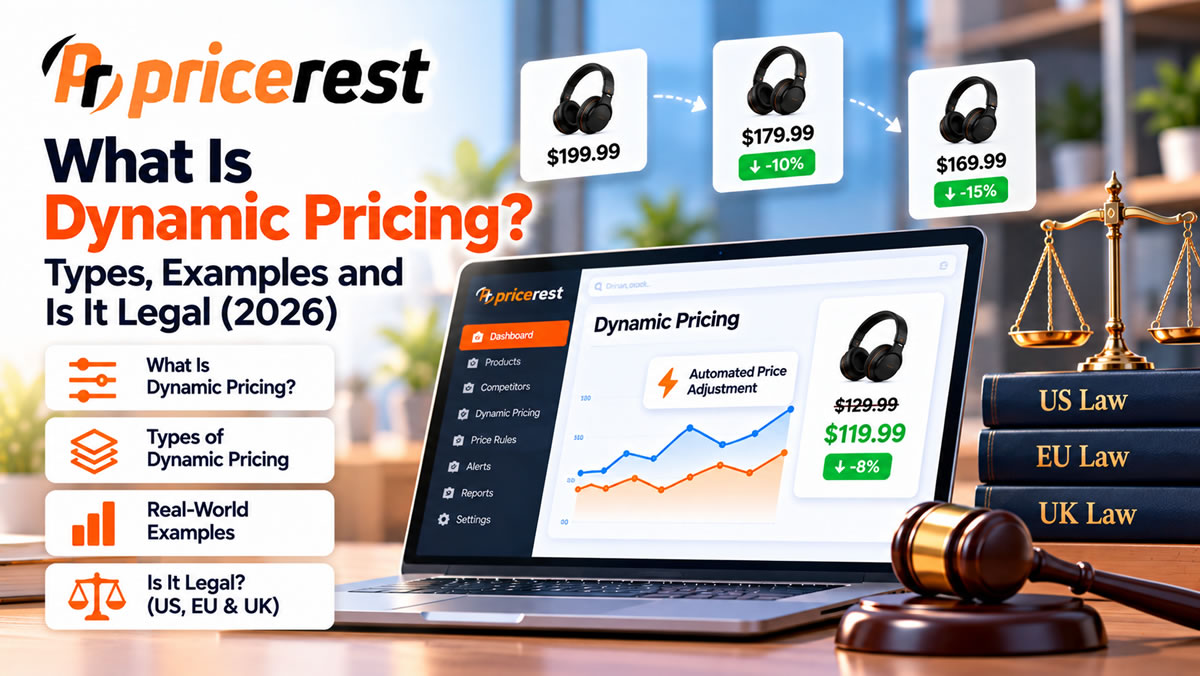
When competitors react to each other through software and shoppers buy through agents, prices can fall quickly. Every automatic rule needs a minimum price that protects your margin. See what dynamic pricing is and its benefits and risks.
What this means for brands
Agents compare every seller of your product, authorized or not. If an unauthorized seller or a marketplace reseller offers your product for less, an agent may send the shopper there. Amazon’s lawsuit against Perplexity even argued that an agent may not select the best price or delivery option. Brands need to see every seller and price that agents can see, through MAP monitoring where it is lawful and unauthorized reseller detection.
Should you allow or block AI agents?
Platforms are split. Shopify opened checkout to browser agents, and Google is building checkout into AI Mode and Gemini. eBay banned unauthorized buy-for-me agents, and TechCrunch reports that Amazon blocks agents from buying on users’ behalf.
| Allow agents | Block agents |
|---|---|
| Reach shoppers who start in AI tools | Keep shoppers on your own site and ads |
| Win sales on price, stock and data quality | Avoid orders you cannot verify |
| Need accurate feeds and real-time stock | Risk being left out of AI comparisons |
For most independent retailers, being visible to agents with accurate data is the safer bet. Large marketplaces with their own assistants have different incentives.
Action
How to prepare your store: 10-step checklist
- Add GTINs and model numbers to every product, so agents can match your listing to the same item elsewhere.
- Keep your product feed fresh. Send price and stock changes to Merchant Center as often as they change.
- Use structured data on product pages, including price, availability, shipping details and return policy.
- Match prices everywhere. The feed, the product page and the checkout must show the same price.
- Make shipping and returns clear. Agents compare the full offer, not only the item price.
- Keep stock real-time. Selling out during an agent checkout loses the sale and the shopper’s trust.
- Monitor competitors’ total prices daily on Google Shopping, marketplaces and their own sites.
- Set price floors and ceilings before you automate any price changes.
- Decide your agent policy and check your robots.txt and terms accordingly.
- Measure AI referrals in your analytics, and ask AI assistants about your products to see how they describe your offer.
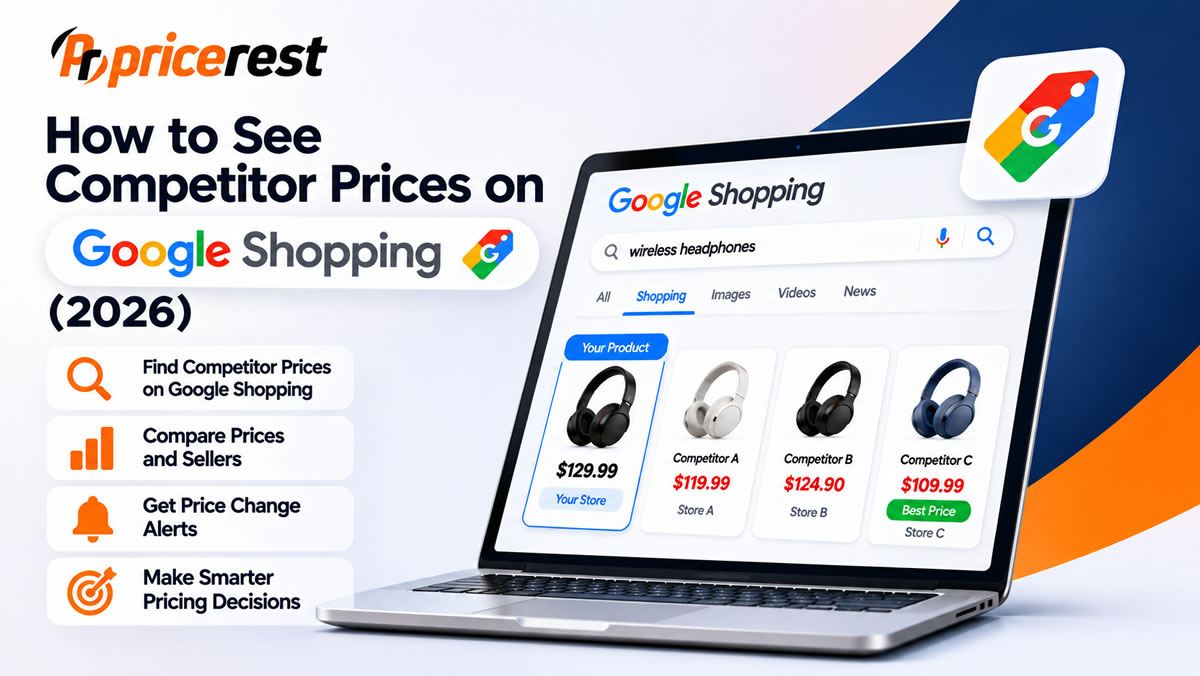
For the Google side, see how to see competitor prices on Google Shopping.
PriceRest
How PriceRest helps
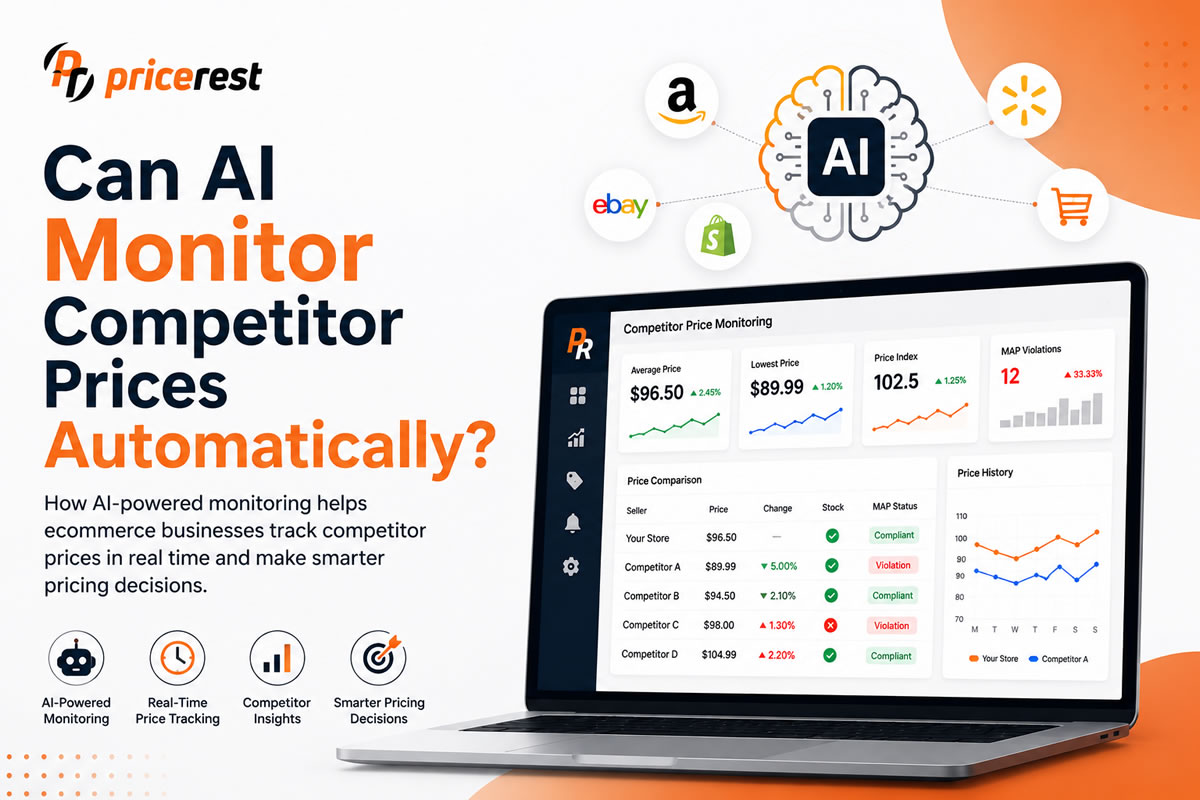
AI agents compare your prices with every competitor in seconds. PriceRest lets you see the same comparison first: it finds where your products are sold, matches identical products with codes and AI image recognition, and tracks each seller’s price and stock over time, so you can react with rules that never go below your floor.
- Coverage. Google Shopping, Amazon on 20 marketplaces, other marketplaces and more than 2,500 online stores in 64 countries.
- Matching. GTIN, MPN, title and AI image matching through our product matching engine.
- Action. Alerts, price and stock history and dynamic pricing with floors and ceilings.
- Brand protection. MAP violation alerts and unauthorized seller detection.
FAQ
Frequently asked questions
What is an AI shopping agent?
An AI shopping agent is software built on a large language model that helps people shop. It understands requests in plain language, searches for products, compares offers across stores and, in some cases, buys on the shopper’s behalf after the shopper approves the purchase.
How do AI shopping agents compare prices?
They collect offers from merchant feeds, shopping indexes and store websites, match listings that are the same product and compare the full offer, including price, shipping, delivery time, stock, returns and ratings. Buying agents can also track a price and act when it falls within the shopper’s budget.
Do AI shopping agents always choose the cheapest product?
No. Agents weigh price together with delivery, stock, returns, ratings and how well a product fits the request. Research published in 2025 found that sensitivity to price, ratings and reviews differs sharply between AI models, and that agents tend to concentrate choices on a few products.
Can ChatGPT buy products for me?
OpenAI launched Instant Checkout in ChatGPT in September 2025. In March 2026 it said Instant Checkout is moving to Apps and that it is prioritizing search and product discovery, so many purchases now finish on the merchant’s own checkout or app.
Can Google buy products for me?
Yes, for eligible merchants. Google’s agentic checkout lets shoppers track a product’s price with a budget, and Google can buy it with Google Pay when the price falls within that budget. Google says it always asks for permission first. Agentic checkout launched in the US in November 2025, and checkout in AI Mode and the Gemini app reached Canada in November 2026.
What is the Universal Commerce Protocol?
The Universal Commerce Protocol, or UCP, is an open standard for agentic commerce announced by Google in January 2026. It was co-developed with Shopify, Etsy, Wayfair, Target and Walmart and gives agents, businesses and payment providers a shared way to handle discovery, purchase and post-purchase support.
What is the Agentic Commerce Protocol?
The Agentic Commerce Protocol, or ACP, is an open standard co-developed by OpenAI and Stripe and launched in September 2025. It lets businesses connect with AI agents through one integration while keeping control over their products, branding and fulfillment.
Where do AI shopping agents get prices from?
It depends on the agent. Google’s shopping features use product data that retailers send through Merchant Center. Browser agents read live product pages. Other assistants combine merchant feeds and web search. Keeping prices identical across your feed, product pages and checkout helps every agent read your offer correctly.
How can retailers prepare for AI shopping agents?
Add GTINs and model numbers, keep product feeds and stock up to date, use structured data with price, availability, shipping and returns, keep prices consistent across channels, monitor competitors’ total prices daily and set price floors before automating any price changes.
Should retailers block AI shopping agents?
It depends on the business. Shopify and Google have opened checkout to agents, while eBay banned unauthorized buy-for-me agents and Amazon blocks outside agents from buying for users. Many independent retailers gain more by being visible to agents with accurate data than by blocking them.
See your prices the way AI agents see them
Competitor prices, stock and seller names across Google Shopping, Amazon and 2,500+ online stores, with alerts and dynamic pricing. 14-day free trial, no credit card required.
Start Free Trial